Category Archives: BAKED & FRIED PRODUCTS

Processed Agricultural Products Used in Baking Industry

What are Processed Agricultural Products

Processed agricultural products are non-agricultural food and drink items made out of agricultural products. The Agro – processing unit is in charge of developing raw agricultural products into improved food products through research. For any processing to be done, the raw agricultural products must be washed, cleaned, milled, cut, chopped, heated, pasteurized, blanched, cooked, canned, frozen, dried, dehydrated, mixed or packaged – which alters their natural state. Almost all food is processed in some way before it is eaten. Example, cassava can be processed into garri, starch or flour for baking.

Reasons for Processing Agricultural Products

Many agricultural products either from fishes, crops, animals or vegetables must be processed either by Cooking, canning, smoking, drying and blending before they can be used. This is because they are perishable and are only suitable for consumption over a short period of time. The reasons why Agricultural Products are processed includes:

  • Processed agricultural products can be easier stored when compared to unprocessed food.
  • Processed agricultural products helps to preserve and increased their lifespan.
  • Processed agricultural products helps to reduce food wastage.
  • Processed agricultural products helps to extends the season they will be available.
  • Processed agricultural products enables the production of different kinds of food.
  • Processed agricultural products helps to improve the quality and taste of the farm products.

Some Processed Agricultural Products for Baking

Some Processed agricultural products includes flour, sugar, milk, butter, corn flour, sesame oil, soy sauce, chocolate, etc.

Flour
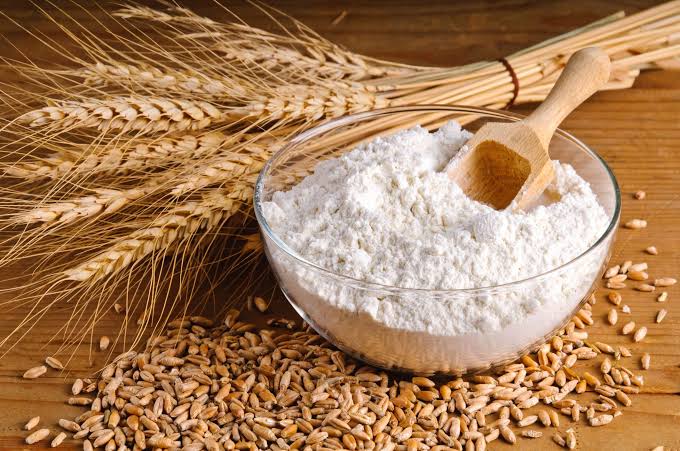
Wheat is a grain plant that is commonly used to processed flour for baking cakes, breads, dough nuts, egg rolls, fish pies, puff puff etc. Flour is one of the most important ingredients for baking. All – purpose flour is the most widely used flour.

Sugar
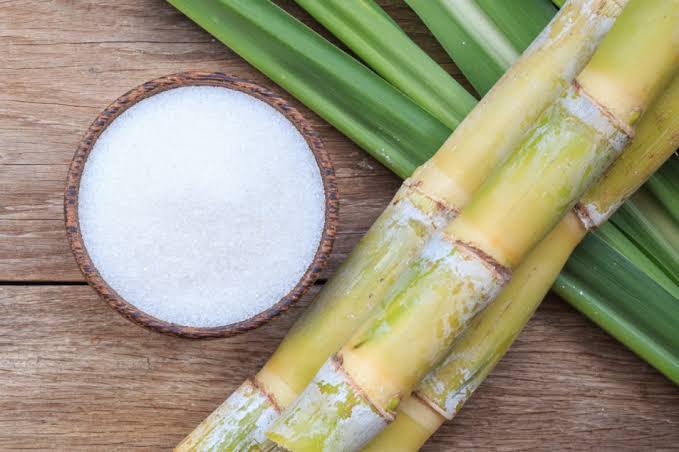
Sugar beets and sugar cane are the main crops used to processed sugar. Sugar is also an important ingredients that adds colour, taste, flavour to baked products. Sugar can be substituted with honey.

Milk
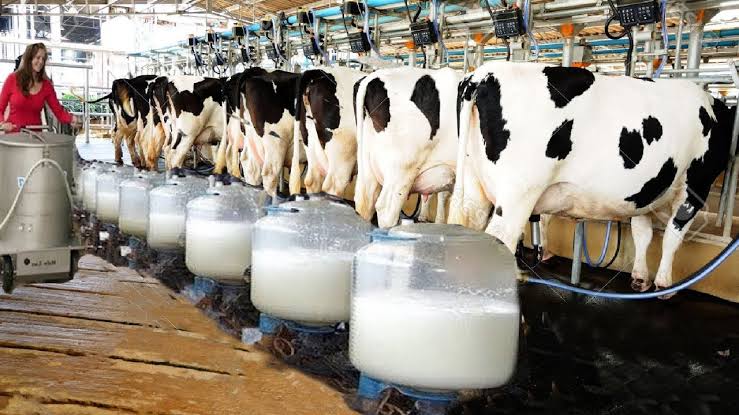
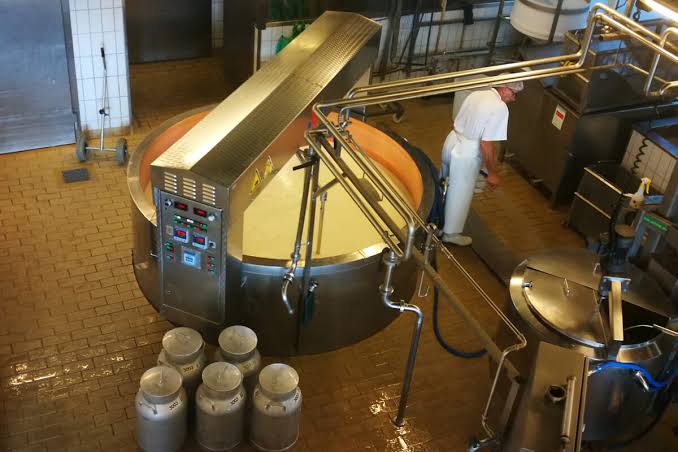
Milk are processed from animals such as cattle, sheep, camel etc which helps improved the texture of baked goods These milk can further be processed into cheese used for fillings pastries such as pizza and coffee cakes etc

Butter

Butter are processed from cow which helps provides richness, tenderness and structure to cookies, cakes, pies and pastries, It also lengthen shelf life. Commercial butter that is commonly use in baking generally has over 80% fat with the rest being water that’s emulsified into the fat.

Corn Flour
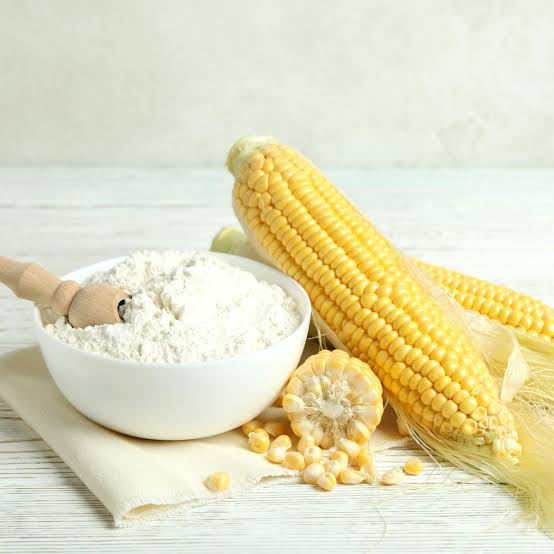
Corn flour or cornstarch are processed from a tall annual cereal grass plant called corn or maize (Zea mays). Corn flour is used as a thickening agent, but it can also be used in baked goods like cookies, brownies and cakes. It can be used as substituted for wheat flour.

Sesame Oil
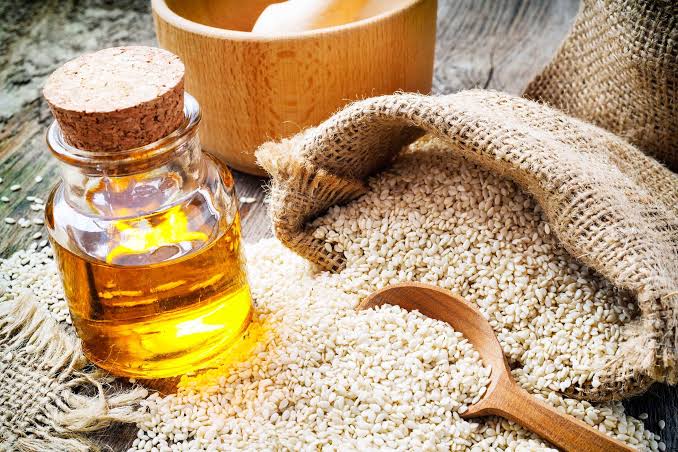
Sesame oil is processed from sesame seeds which are small, flavorsome oilseeds from the sesame herbaceous plant (Sesamum indicum L.). These seeds can often be found in bread. For example, these seeds are sprinkled on hamburger buns. They are sometimes toasted and used in salads and for meat pie sauce fillings.

Soy Sauce
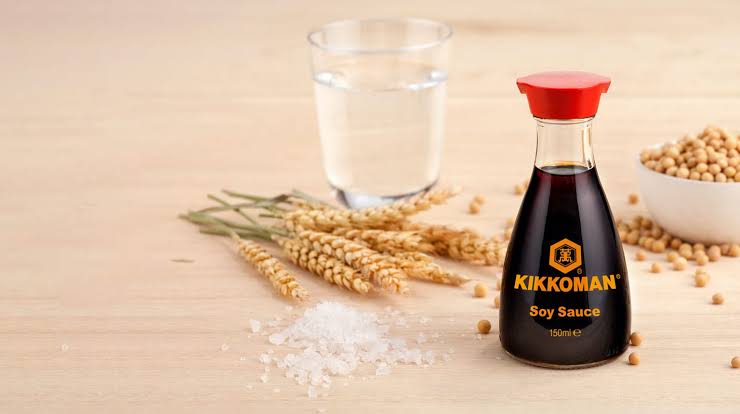
Soy sauce is processed from fermented soybeans and wheat. It can be used to replace the pinch of salt in your baking mixture. It add colour to meat pie sauce fillings.

Chocolate
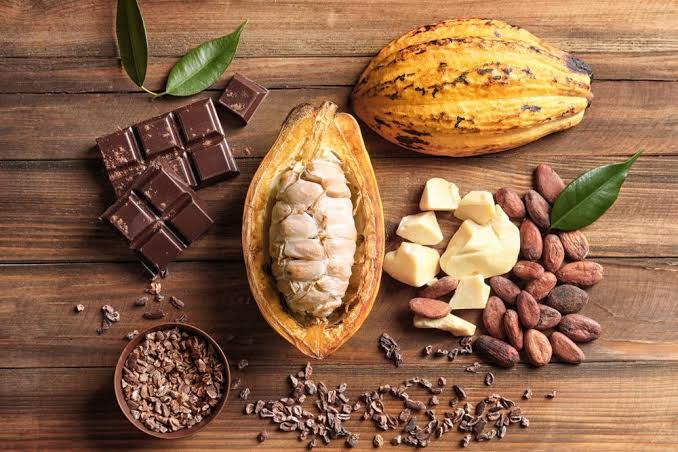
Chocolate is processed from cocoa, an evergreen tree in the Malvaceae family that is grown for its seeds (beans), which are primarily used in the production of chocolate. Chocolate is used primarily as an ingredient in recipes such as brownies, cakes, and frostings in baking.

Vegetables
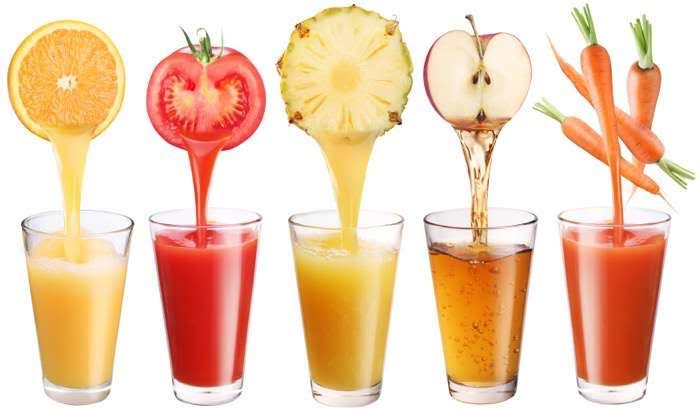
Juice and Smoothie can be processed from vegetables, which can be served along side with baked products. Accounting for over 90 percent of the non-fruit juice trade, the most popular vegetables processed into juice are tomatoes, beets and carrots with their blends widely used in the preparation of tomato-, beet- and carrot-based juices, smoothies, beverages, sauces, baby food, and many other food products.

Conclusion

The transformation of agricultural products into food and services is very vital in the baking industry.
Farmer and Chef Relationship

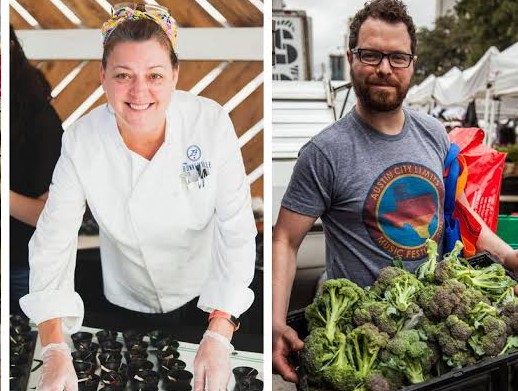
A farmer is a person engaged in agriculture, raising living organisms for food or raw materials. Farmers are the backbone of our society. They are the ones who provide us all the food that we eat. Some farmers grow a range of crops, other breed fishes, while other rear animals and produces dairy cows and sell their milk.

Nigeria has 70.8 million hectares of agriculture land area with maize, cassava, guinea corn, yam beans, millet and rice being the major crops. Nigeria’s rice production rose from 3.7 million metric tons in 2017 to 4.0 million metric tons in 2018. Inspite of this, only 57 percent of the 6.7 million metric tons of rice consumed in Nigeria annually is locally produced leading to a deficit of about 3 million metric tons, which is either imported or smuggled into the country illegally. To stimulate local production, the Government banned importation of rice in 2019.

A chef is a highly skilled person who is in charge of food production in a commercial kitchen of a restaurant, hotel, resort, hospital or cruise ship. The word “chef” is derived from the term chef de cuisine, the director or head of a kitchen. A chef oversees a restaurants kitchen and these includes planning the menu, maintaining the budget, pricing menu items, preparing food, purchasing supplies, ensuring quality of service, ensuring safety, and managing staff.

Farmer to Chef

A chef who is curious about where local food comes from should see the farm in person. A farm visit is a great way to connect chefs with unique aspects of serving local food.

In person conversation between the farmer and the chef, regardless of whether it’s on or off the farm, should always include a sample and anecdote about the farm product that relates to the restaurant’s cuisine.

Relationship Between Farmer and Chef

Once a relationship is established, many farms and wholesale cooperatives include chefs in pre-season production planning to determine the kind and the quantity of product a chef will purchase during the growing season.

Standard ingredients (i.e. garlic, potatoes, onions) are generally not the champion ingredient of a restaurant’s dish but are products from the farm.

Every farm requires by the chefs to prepare local and intercontinental dishes has a growing season.

Every restaurant is different, which is a good reason to know the type of food a chef cooks before making a pitch. It’s also a good reason for a farmer to draw on passion – food is an experience. A farmer can increase interest in products by explaining attractive attributes including a product’s heritage, traditional and unconventional uses, and how it fits into the farm’s growing scheme (not only seasonal but appropriate for climate, soil, better taste etc.).

Farmers and chefs should discuss on-farm post-harvest handling (i.e. cleaning protocol, storage, presence of pests etc.).

A good farmer-chef relationship is often personal, but maintained by an explicit arrangement. Clear communication and effective systems help each person get what they need from the exchange.

Chin chin

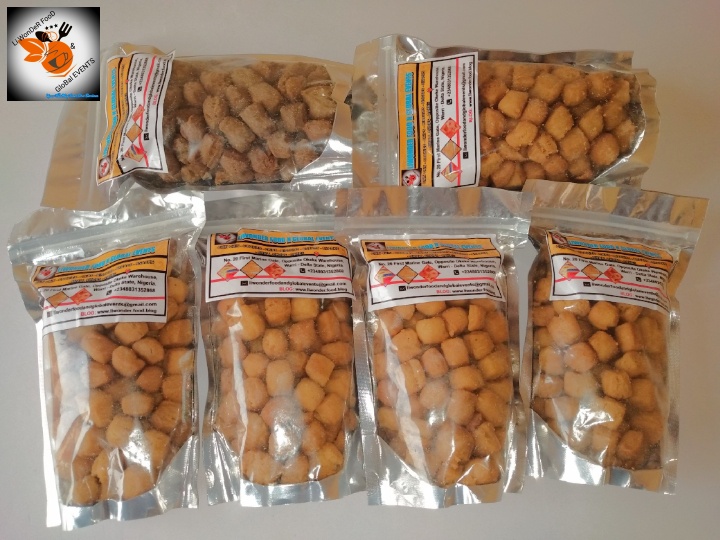
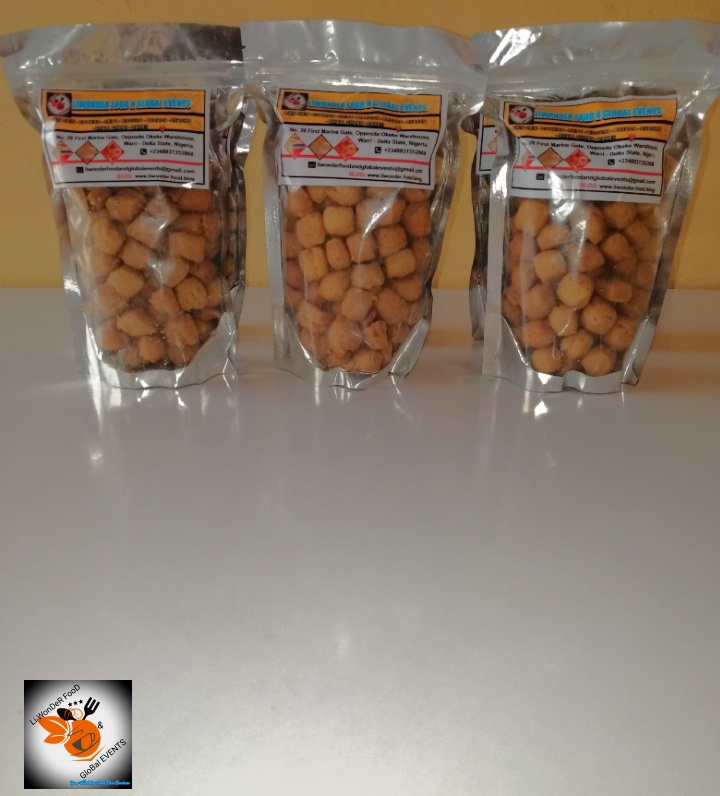
Chin chin is a very popular snack in Nigeria and it is a popular fried pastry native to West Africa but it can also be baked.

it is made from basic combination of flour, butter or margarine, egg, milk and sugar. There are other optional ingredients like baking powder and nutmeg, these are strictly based on preference an individual.

Chin chin can either be hard or crunchy when deep fried. It can be prepared in numerous ways, but the most common varieties are usually crunchy on the outside and soft on the inside. Traditionally, the pastry is fried, but it also be bake for those are restricted from eating fried snacks.

contact LIWONDER FOOD ‘N’ GLOBAL EVENTS for your order.

The Best Flour For Baking Meat Pie

Flour a Raw Agricultural Product

Flour is a natural product made by milling grains, usually wheat, to release the flour that sits inside. Although flour can be made from a wide variety of plants, the vast majority is made from wheat. Maize flour is used to make bread, muffins, doughnuts, pancake mixes, infant foods, biscuits, wafers, breakfast cereals and breadings, and as a filler, binder and carrier in meat products. Flour is considered a raw agricultural product and wheat can become contaminated from soil, animal feces, insects, diseased plants, and other agents during production, harvest, storage, or transport.

One key factor that differentiates the different types of flour, is the amount of gluten. Gluten is a protein that helps wheat-based doughs rise and hold their shape.

When flour is mixed with water, the flour proteins; gliadin and glutenin, combine to form the protein known as gluten. Gluten gives dough elasticity, strength, and structure. Individuals with celiac disease, certain neurological diseases, certain skin conditions, or gluten sensitivities of other etiologies often benefit from a gluten-free diet.

All purpose or pastry flour is the best flour for making meat pie dough. Bread flour can be substituted for all-purpose flour in pie crust.

Types of Flour

White Flour: White flour consists of the finely ground endosperm of the wheat kernel.

All-Purpose Flour: All-Purpose flour consists of white flour milled from hard wheats or a blend of hard and soft wheats. It is usually enriched and can be either bleached or unbleached.

Whole Wheat Flour: Whole wheat flour consists of ground whole wheat kernels, but can be created through combining white flour, germ, and bran that have been separating during milling. It contains higher insoluble fiber levels than white flours.

Bread Flour: Bread flour consists of white flour milled from a blend of hard wheats and has greater gluten strength than other types of flour. It is sometimes conditioned with ascorbic acid. Bread flour is a high-protein flour that typically contains between 12 and 14% protein and is designed for baking yeasted breads

Cake Flour: Cake flour consists of white flour from a blend of soft wheats. It has lower protein and higher starch contents than other flour types.

Self-Rising Flour: Self-rising flour consists of all-purpose flour with added salt and leavening agents. It is also referred to as phosphate flour.

Pastry Flour: Pastry flour consists of white flour from a blend of soft wheats and has properties between that of all-purpose and cake flours.

Gluten Flour: Gluten flour consists of ground spring wheat. It has higher protein and lower starch contents than other types of flour.

Semolina Flour: Semolina flour consists of the coarsely ground endosperm of durum wheat and is usually enriched.

Durum Flour: Durum flour consists of finely ground semolina flour.

Meat Pie Filling

Meat pie filling can be prepared with minced meat, Irish potatoes, carrots and other seasonings etc.

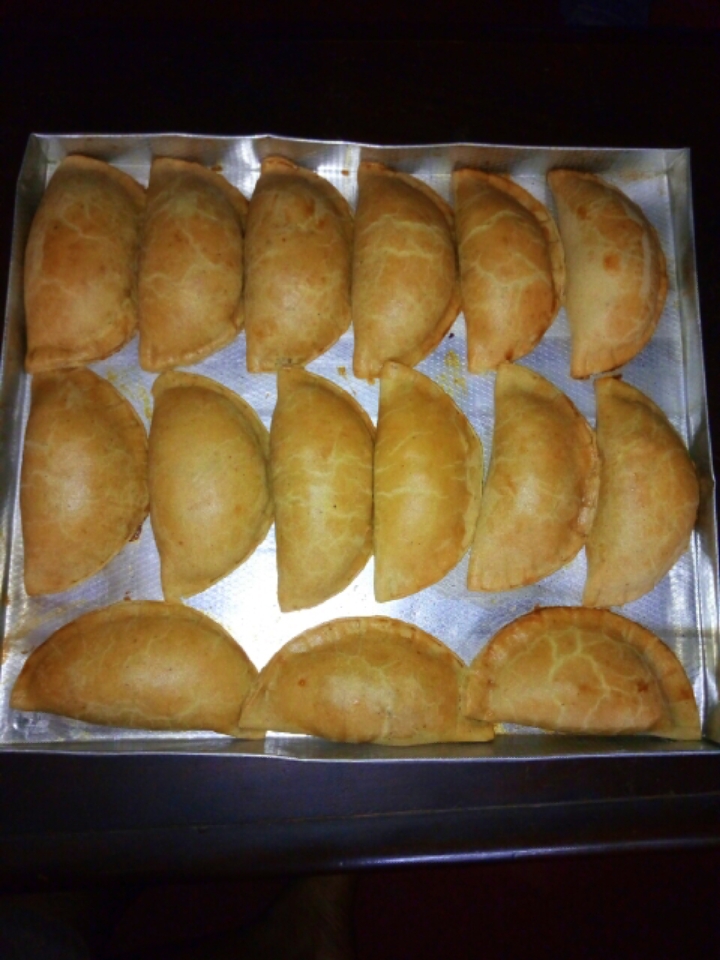
A meat pie is a pie with a filling of meat and often other savory ingredients. They are popular in the United Kingdom, Australia, Ghana, Nigeria, Europe, New Zealand, Canada, Zimbabwe and South Africa.

The best Nigerian Meat Pie is moist, yummy and has minced meat, potato and carrot filling. The filling is usually adequately seasoned and gives the meat pie its unique taste.

The Nigerian Meat Pie is a popular snack because it is tasty, moist and does not produce crumbs when it is being eaten, if it is well-prepared, then it is yummy.

Meat Pie is a yummy snack readily found on street corners, eateries and even parties. This delicious snack can be enjoyed at home, parties, weddings etc.

contact LIWONDER FOOD ‘N’ GLOBAL EVENTS for your order.

Cake

What is Cake?

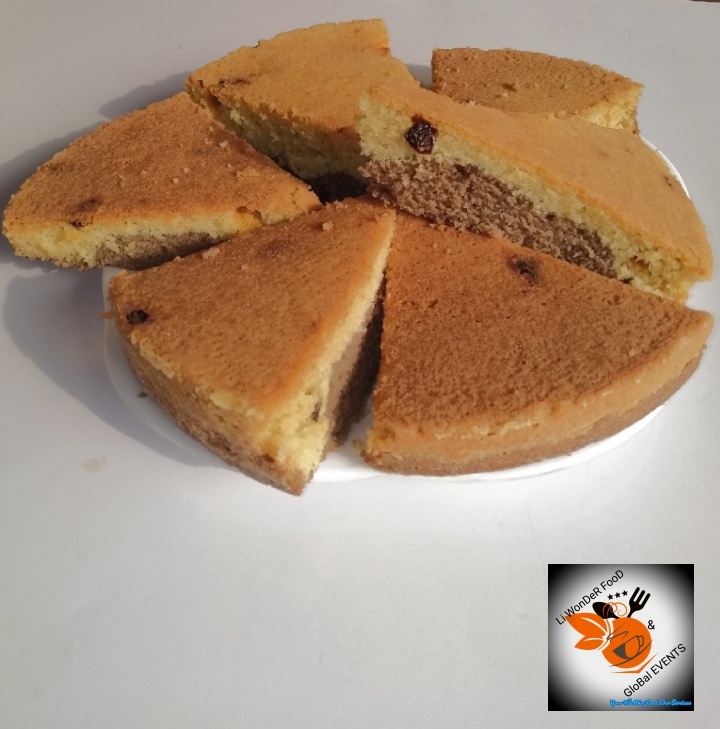
A cake is a sweet food made by baking a mixture of flour, eggs, sugar, and fat in an oven. Cakes may be large and cut into slices or small and intended for one person only. Cake is a form of sweet dessert that is typically baked. In their oldest forms, cakes were modifications of breads, but cakes now cover a wide range of preparations that can be simple or elaborate, and that share features with other desserts such as pastries, meringues, custards, and pies. Any number of fillings, frosting and final decorations can be chosen to make every cake unique and an artistic expression of its maker.  Cake is often served as a celebratory dish on ceremonial occasions, such as weddings, anniversaries, and birthdays.

History

The term “cake” has a long history. The word itself is of Viking origin, from the Old Norse word “kaka” The ancient Greeks called cake πλακοῦς (plakous), which was derived from the word for “flat”, πλακόεις (plakoeis). It was baked using flour mixed with eggs, milk, nuts, and honey. Early cakes in England were also essentially bread: the most obvious differences between a “cake” and “bread” were the round, flat shape of the cakes, and the cooking method, which turned cakes over once while cooking, while bread was left upright throughout the baking process. Sponge cakes, leavened with beaten eggs, originated during the Renaissance, possibly in Spain.

Cake Ingredients

Typical cake ingredients are flour, sugar, eggs, butter or oil or margarine, a liquid, and leavening agents, such as baking soda or baking powder. Common additional ingredients and flavourings include dried, candied, or fresh fruit, nuts, cocoa, and extracts such as vanilla, with numerous substitutions for the primary ingredients. Cakes can also be filled with fruit preserves, nuts or dessert sauces (like pastry cream), iced with buttercream or other icings, and decorated with marzipan, piped borders, or candied fruit.

Varieties of Cakes

Butter cakes: These are made from creamed butter, sugar, eggs, and flour. They rely on the combination of butter and sugar beaten for an extended time to incorporate air into the batter.

Sponge cakes (or foam cakes): These are made from whipped eggs, sugar, and flour. They rely primarily on trapped air in a protein matrix (generally of beaten eggs) to provide leavening, sometimes with a bit of baking powder or other chemical leaven added as insurance. Sponge cakes are thought to be the oldest cakes made without yeast.

Chiffon cakes: These are sponge cakes with vegetable oil, which adds moistness.

Chocolate cakes: These are butter cakes, sponge cakes, or other cakes flavored with melted chocolate or cocoa powder.

Coffee cakes: These are cakes to be serve with coffee or tea at breakfast or at a coffee break. These cakes often have a crumb topping called streusel or a light glaze drizzle.

Baked flourless cakes: These cakes include baked cheesecakes and flourless chocolate cakes. Cheesecakes, despite their name, aren’t really cakes at all. Cheesecakes are in fact custard pies, with a filling made mostly of some form of cheese (often cream cheese, mascarpone, ricotta, or the like), and have very little flour added, although a flour-based or graham cracker crust may be used. Cheesecakes are also very old, with evidence of honey-sweetened cakes dating back to ancient Greece.

Butter or oil layer cakes: These cakes include most of the traditional cakes used as birthday cakes, etc., and those sold as packaged cakes. Baking powder or bicarbonate of soda are used to provide both lift and a moist texture.

Yeast cakes: These are the oldest and are very similar to yeast breads. Such cakes are often very traditional in form, and include such pastries as babka and stollen.

Lancashire Courting Cakes: These are fruit-filled cake baked by a fiancée for her betrothed. The cake has been described as “somewhere between a firm sponge – with a greater proportion of flour to fat and eggs than a Victoria sponge cake – and a shortbread base and was proof of the bride-to-be’s baking skills”. Traditionally it is a two-layer cake filled and topped with strawberries or raspberries and whipped cream.

Bundt cakes: These are cake balls that are conical, such as the Kransekake cupcakes and madeleines, which are both sized for a single person

Sheet cakes: These are simple, flat, rectangular cakes baked in sheet pans, Swiss rolls.

contact LIWONDER FOOD ‘N’ GLOBAL EVENTS for your order.