
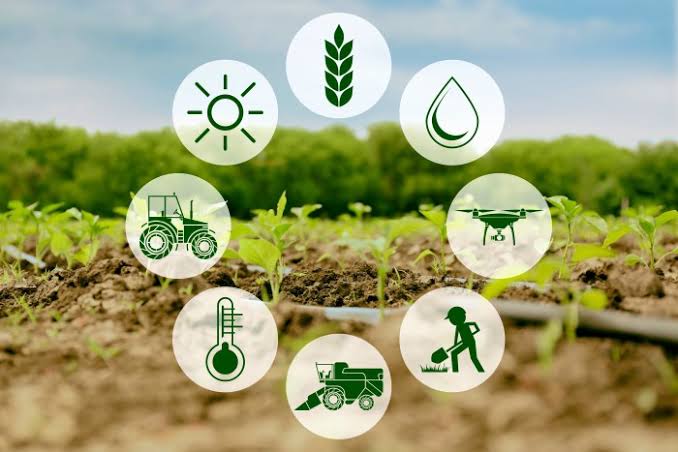
Modern technology involves the use of machines that are designed and built with scientific and engineering knowledge which includes information technology based on software, computers and networks.
Modern technology has impacted every area of our lives including Agriculture. It is all about farming in a much quicker and efficient way by improving the workflow which could be helping humans or doing the task alone.
In terms of accuracy and efficiency machines are always better when compared to humans. The introduction of new and improved technologies has increased the production and productivity of crops and reducing the cost of production.
The American farming market is one of the pioneers in the implementation of advanced technologies in agriculture. Its cultivation industry has experienced a colossal transformation due to the growing demand for ‘green’ farming practices, rising population, and high-income increase. Diverse agricultural start-ups and technology innovators are creating new intelligent systems. As a result, farmers can improve the production yield by enhancing inputs and a well-planned market strategy.
The USA Smart Farming market is anticipated to reach $11.93 billion by 2023. The agricultural market is very dynamic, and we can expect to see even more technological development in the years to come. Because of the growing world’s demands and digital evolution, the Smart Farming market is estimated to grow at a CAGR of 12.36% during the forecast period, 2020-2026.
Types of Modern Technology in Agriculture
The use of technology is a booster dose for fishery, aquaculture, animal breeding and crop farming. Smart technology is the key to better productivity and disease management. The following are types of Modern Technology that can be use in
IoT Sensors: These can be use to collect data – on levels of salinity, dissolved oxygen, water pH and temperature, to name a few. The latest technologies of IoT Sensors can even monitor the metabolism and heart rate of the stock. These insights enable farmers to take timely actions to create an ideal environment for their aquafarms, yielding better results.
GPS Technology; GPS in agriculture allows farmers to precisely navigate to specific locations year after year in the field to collect soil samples or monitor crop conditions. It helps in locating the field boundaries and applying fertilizers, pesticides, and herbicides accurately. This reduces wastage and increases efficiency.
Unmanned Aerial Vehicles (UAVs): It is commonly referred to drones is an aircraft without any human pilot, crew, or passengers on board. The drones are used keep crops healthy by dispersing water, fertilizer, and pesticides, mapping, monitoring soil health, research purpose etc.
Weather Monitoring: Weather is the most important element that affect crop production which cannot be control by a farmer. Farmers can access weather data on weather apps, websites, weather forecast from TV, computer, mobile, radio etc. Based on weather information, farmers can plan times for sowing, protection, harvesting, and other field activities in order to avoid negative weather effects and yield losses.
Soil Sensors: Soil sensors are used to measure soil moisture levels, temperature and other factors that affect crop growth. Depending on the technology category, some sensors that measure volumetric water content while some sensors that measure soil tension when placed in the soil profile.
Agricultural Robots: Robots are developed to replace tasks done by humans on farmlands. Many years back, farmers use their family to cultivate farmlands before the introduction of farm tools and now modern technology like robots is used to enhance productivity.
Conclusion
Farm automation is also known as smart farming. It is associated with Smart Farming. Farm automation uses drones, robotics, and software as a way to transform the current agriculture industry. Along with autonomous tractors, harvesting can be done with a push of a button. These harvesters are allowing farmers to save on labor costs.
Agricultural sector now understands that using automation will leads to change and efficient productivity. Gone are the days of farming practices damage resources but now, there is a significant concern to protect the planet from climate change and high demand for quality food. With all these issues at the forefront, farming automation leads the charge to a more sustainable agricultural industry.

